"The appropriation for a house should be divided into two equal parts, one-half for the house, the other for the gardens, pathways, court, approach, terrace and the rest of it, or, as it might be termed, one-half for the pudding, the other for the sauce." Architect Thomas Hastings
Showing posts with label Arts and Decorations 1932. Show all posts
Showing posts with label Arts and Decorations 1932. Show all posts
Leader of one of the most popular dance bands in the United States during the 1920's, Paul Whiteman produced recordings that were immensely successful, and press notices often referred to him as the "King of Jazz". His band played as part of the grand finale entertainment. Click on the video for the music of the era.
Requiring a Sense of Humor, a Generous Supply of Talent, and a Country Estate with the Spacious Charm of "Caumsett"
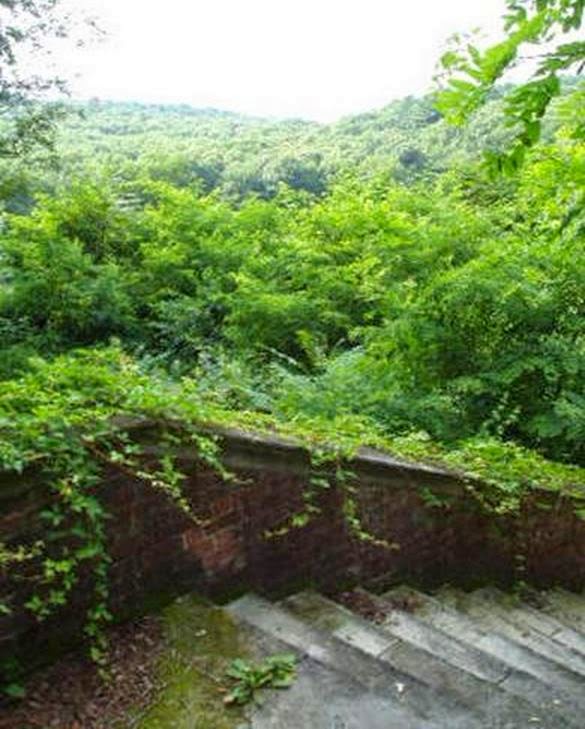
On the west side of the Main House are the Boxwood and Long Gardens. This area, like much of the grounds, was designed by the Olmsted Brothers with input from Evelyn Field, Marshall’s first wife. Several statues filled the niches in the brick wall that runs along the garden. In spring the apple trees in the garden bloom beautifully, and at the end of the Long Garden is the gate that leads to the never-completed terraced garden.
JUST when all the variations in parties seem to have been exhausted, some public benefactor thinks of a new one, and life goes gayly on. We all remember the Great Treasure Hunt Era—during which the bright young people swept over the countryside like a horde of Huns, routing the peasantry out of bed to inquire the way to Smith's Cove, or Barker's Corners. And, the Fancy Dress Era—particularly dangerous during its later and more decadent phase, when guests started dressing up as their fellow guests, thereby causing a general deflation in everybody's ego. And of course, before all that, the classic standby of all our more rural hostesses, the Garden Party—chiefly distinguished by picture hats and ominous thunder clouds on the horizon. . . . But now a newer and better day dawns. The circus party is in order, with the famous Dutch Treat Dinner and Circus at the Marshall Field's North Shore estate as its very admirable and amusing example.
A CORNER of the garden at "Caumsett", the Marshall Field estate at Huntington, Long Island. This delightful place was the scene of one of the season's most amusing parties—a dinner and circus given for the benefit of the Long Island Biological Association. As the invitation suggests, the activities were inspired by the sawdust ring, and the big top, ranging widely from a freak show of strictly amateur standing to the perverse pleasures of breaking china without inhibition or apology to the hostess.
One of the most successful parties of the season, it demanded a glamorous setting, and "Caumsett", with its broad lawns and gracious formal gardens, its stately Georgian house and wide terraces, made a perfect background for the festivity. Four thousand generous acres sweep down to the Sound and twelve hundred guests could not crowd or bustle its hospitable tranquility. Nor was there lacking an excuse for the party, for the Long Island Biological Association, of which Mr Marshall Field is secretary, was worthily in need of funds and contributed to the occasion by furnishing the party with a highly commendable purpose. Of course, you mustn't misunderstand us. This was not a common or garden variety of circus. Don't look for a general return to the simple life, the naive and ingenuous amusement. Quite the contrary—this circus was a very sophisticated, typically 20th Century variety, revealing all sorts of unsuspected talents for showmanship among the amateur ranks. It has now been established beyond the shadow of a doubt that Mr. Vincent Astor, for example, is incomparable as the chief Factotum of a china-breaking booth—that the "Baldwin Twins" can, on occasion, be quite successfully Siamese—that the big top is the poorer for not having Mr. Lucius P. Ordway and Mr. Edward McIlvaine as barkers—and particularly, that a certain wistful painted donkey in the photographic booth will go down in the history of art as bearing on its flanks the unmistakable brush strokes of a genuine Gershwin.
DINNER on the terrace—the first step in the march of events, A gay affair, lit by searchlights and punctuated by the rhythmic enthusiasms of a negro orchestra. Above—Mrs. Frederic C. Thomas' table.
First, speaking chronologically, there came the dinner—served on the lawn, with Mr. Marshall Field and Mr. William Rhinelander Stewart as the delightfully urbane headwaiters. And by way of further attractions—an open air dance floor with one of those negro orchestras that keep you up on your feet for hours while the consomme grows cold, and the sherbet melts wistfully away.
THE "Baldwin Twins"—Mrs. Baldwin Browne and Mrs. Baldwin Preston—famous for their ability to completely confuse the general public, prove conclusively that they can be quite successfully Siamese when the occasion arises.
Mr. Frank Field as that curious phenomenon, the World's Tallest Dwarf.
Mr. Lucius P. Ordway and Mr. Edward MeIlvaine as barkers extraordinary for the "greatest show on earth".
After the demi-tasse, there was a general trek to the midway. On with the circus. Come on, ladies and gentlemen, and see the greatest show on earth. . . . Barkers—noise—booths.... To the right, ladies and gentlemen, the Freak Show! Nature will have her little jokes. Consider Captain "Bunny" Head as the Wild Man From Borneo—so fearsomely furry that women cover their eyes, and strong men pale beneath their tan. And Mr. Lytle Hull, the Strong Man —all muscles and mustachios. Also, Mrs. Baldwin Browne, and Mrs. Baldwin Preston being very Siamese. The Two-Headed Woman, looking suspiciously like Mrs. Malcolm L. Meacham, and Mrs. Ralph H. Isham. Mr. Frank Field as the World's Tallest Dwarf. Mrs. Joe Davis as the highly decorative tattooed lady. And finally, Mrs. Harold E. Talbott as one of the most duck-billed Duck Bill Women it has ever been our pleasure to behold. . . .
A MURAL painter at play—Lucinda Goldsborough Ballard, and her delightful side-show caricatures for the photographic booth. Mr. George Gershwin, at right, contributed advice and final touch of paint to the donkey.
MRS. MARSHALL FIELD, Mr. Wadsworth R. Lewis, and Mr. Marshall Field— as the Fat Lady, the Living Skeleton, and the Midget.
THIS touching little family group includes Mr. and Mrs. Ogden Phipps as the young couple, Miss Eleanor Barry as the Baby, and Mr. Winston Guest as the Innocent Bystander.
CAPTAIN "Bunny" Head—completely submerged in the personality of the Wild Man From Borneo. So fearsomely furry that women cover their eyes and strong men pale beneath their tan—and quite the most irrepressible of all the freaks at the circus party.
Mr. Lytle Hull, as the “Strong Man”
And now, ladies and gentlemen—to the left we have the photographic booth, otherwise known as the Coney Island Booth. Have your pictures taken as the Fat Lady, the Living Skeleton, the Sweet Young Couple. Consider how your grandchildren will cherish these little mementos. Observe the quaint charm of this masterpiece—an equestrian portrait of Mrs. Harold Talbott and Mr. John D. Kennedy, familiarly known as "Travels with a Donkey." Or this touching family group, a bit sentimental perhaps, but sentiment makes the world go round—Mr. and Mrs. Ogden Phipps, gazing fondly at the Little One, who the way, bears quite a startling resemblance to Miss Eleanor Barry. Step right up, ladies and gentlemen, and have your pictures taken. Incidentally we take this opportunity to warn you, watch out for the Bicycle Built for Two. It disappeared from this booth two hours ago, and hasn't been seen since. Dreadful rumors reach our ears that this death-dealing device is being wildly driven about the grounds by various mad wags, with no regard for life and limb. We disclaim all responsibility for this Public Menace. . . .
Leaving the photographic booth behind us, we approach the hit of the show. The Living Picture Booth, ladies and gentlemen. The high spot wit and humor in this stupendous spectacle. Tableaus by Mr. Baragwanath, and Mr. George Abbot assisted by several charming young models. Bits of human drama, in short, ladies and gentlemen—Life. Tragic perhaps, but life is like that. The facts must be faced. Consider, for example, this heart-rending scene—"Her Tragic Honeymoon." The curtain parts and what do we find? But no, we shan't spoil it for you. Let us proceed to the next little scene—"A Bird in a Gilded Cage." The curtain parts and there we find, of all things—a canary bird in a gilded cage—to the complete amazement of the audience and the canary bird. Step right up ladies and gentlemen, and see the Living Pictures. Incidental organ music by Mrs. James Warburg. Step right up. . . .
And now, ladies and gentlemen, step right this way for the China Breaking Booth! The chance of a lifetime to just let yourself go. Three balls to each person, and all the china you can break. Think of the Financial Situation,—think of the Political Situation,—think of practically any situation, and just let yourself go. Step right up, ladies and gentlemen,—Mr. Astor will give you each three balls.
But let us pause a moment, ladies and gentlemen. What is this dashing up the road in a cloud of dust. Why the applause? Why all the laughter and cheering? Prepare to be overwhelmed, ladies and gentlemen. Prepare to meet the most famous character of the current American scene, the idol of American childhood, the toast of the talkies—his Royal Highness—Mickey Mouse. Where, my friends, is the teddy bear, once the pride of every nursery? Laid low, ladies and gentlemen, by the Mickey Mouse toys. Where are the movie "shorts'' and Mack Sennett comedies of yesteryear? Driven into oblivion by the conquering hero, Mickey Mouse. And even now, I feel it my duty to warn you that he has come to this party by special truck, direct from the studio, with the dastardly purpose of stopping; this show. Step right up, ladies and gentlemen, and see Mickey Mouse in action. . . .
And finally, ladies and gentlemen—the grand finale. Step into the living room. Come right along and enjoy the midnight cabaret. Listen to the Boswell sisters,the real authentic bona fide Boswell sisters, ladies and gentlemen. You've heard them over the radio, and now you have the golden opportunity to hear them in person, ab-so-lute-ly in person. Come in and hear George Gershwin at the piano. You all know George Gershwin, the famous composer who "made a lady out jazz" with his Rhapsody in Blue. Also, ladies and gentlemen, you will hear Ramona, the "find of the season"—the recent discovery of Mr. Paul Whiteman, and the bright particular star of the Biltmore Cascades. Ramona will sing and play for you. . . . But, to continue with this all star cast, it is also my very great pleasure to announce that Mr. & Mrs. "Lefty" Flynn will sing, to the accompaniment of Mr. Flynn's banjo. Mr. & Mrs. Flynn's delightful duets are familiar to many of you, and need no further ballyhoo. Also—that Mr. Bradford Norman and Mr. Dick Meyer will prove, with their usual virtuosity, that two pianos are infinitely better than one. . . . And so on, and so on. . . . But the barker grows hoarse.
A party to end parties, someone called it. Rather a party to usher in a new era of parties. A typical party of these nineteen-thirties where a hostess—or several hostesses—gathers around her all the amusing and fun-loving people she knows, and where every guest contributes his own share to the entertainment.
"Caumsett", named for the Matinecock Indian word meaning place by a sharp rock.
This is the entrance to the never completed Terrace Garden looking back towards main house. It was to stretch all the way to the Master's Bathhouse.
Mrs. Frederic C. Thomas and Mr. O. Allen Campbell, one of the officials
Frederic Chichester Thomas, Sr. was an architect and designed his own home on Long Island called "Woodlee Farm" somewhere along Woodbury Road, in Cold Spring Harbor, now demolished. "The Oaces", estate of Oliver Allen Campbell.
Press photo of Palm Beach FL Society Mr/Mrs Edward McIlvain at the Patio. Mrs. McIlvain is the former Peggy Seyburn, niece of Mrs. Dodge Sloane
Mr & Mrs August Belmont Jr arrive at the Southampton Riding and Hunt Club steeplechase in Southampton, L.I. ca 1935
Between 1919 and 1927, Flynn appeared in 40 feature films, often as the lead actor, and sometimes as a sports hero or daring adventurer.
"Lefty" had a six-week affair with Nora Langhorne Phipps, wife of Paul Phipps of London. They had daughter Joyce Irene Grenfell. The athlete; as it happened, was a guest at the Long Island home of Mr. and Mrs. Paul Phipps. It wasn't the type of love that is satisfied with a rendezvous now and then. It was a very possessive sort of passion. The couple eloped together to North Yakima, Washington, letting public opinion feel as it liked about it. They stayed for nearly six weeks while Flynn tried to find work as a farm laborer. They nearly starved. They took a train headed east. At Chicago they said goodbye. One went east . . . back to her husband and children. And the other went west(Hollywood). They never saw each other again until 1930, sixteen years later, when they did finally marry. Married and living in Tryon N. C., F. Scoot Fitzgerald was a frequent guest. Nora tried to curb his drinking, with only limited success.
NORA LANGHORNE Charcoal Drawings by John S. Sargent c. 1907
Nora's sister was Lady Astor. Her father-in-law, William Waldorf Astor, was the great grandson of John Jacob Astor. He became a naturalized British subject, bought Hever Castle - pouring millions into restoring it, got elected member of Parliament in 1910, raised to peerage in 1916 (House of Lords), and then was created Viscount Astor in 1917. His son won his seat in the House of Commons. In 1919 her father-in-law died. Nancy's husband succeeded his father as the second Viscount Astor of Hever Castle and he entered the House of Lords, vacating his seat in the lower House. At the time that Flynn came to the Phipps home as a guest, Lady Astor was already winning the prominence that was going to make her the first woman member of the English Parliament. Nancy became a candidate for her husband's vacant seat and won - the first woman to ever hold a seat in the House of Commons. Lady Astor to Winston Churchill, "Winston, if I were your wife I'd put poison in your coffee." Whereupon Winston said, "Nancy, if I were your husband I'd drink it."
MRS. WILLIAM WALDORF ASTOR Profile John Singer Sargent c. 1907 Charcoal on white paper
Another sister, Irene Langhorne, was the original Gibson Girl.
Charles Dana Gibson recognized Irene as the girl of his dreams and he sketches her the moment that he saw her.
Mr. Lytle Hull(Strong Man) went on to marry the former Helen Huntington Astor(Vincent). They resided at "The Locust".
THE CASCADES. The Biltmore summer dining garden. This charming and artistic dining garden was situated on the nineteenth floor of the hotel, with an unobstructed view of almost the entire city. The Cascades was one of the most popular spots in New York during the hot summer months.
Click HERE to see the invitation to this party. From the New York Times announcing the party(additional information/photos of the guests) on July 11, 1932. Special before the "Circus" from the paper published July 15th.
The invitation billed the Circus Party as a "not fancy dress" affair although the guests arrived in black tie and floor length gowns.
Marshall Field III was vice President and Treasurer of the Long Island Biological Association, now known as Cold Spring Harbor Laboratory. Second wife, Audrey Jennings (Standard Oil, "Burrwood") Field was known for her spectacular parties. To benefit the Long Island Biological Association, Audrey planned the party which was dubbed "one of the funniest parties of the season" with a circus theme.
Dinner was served by Louis Sherry’s of New York City on the estates lawns and terraces, which were lit by great flood lights and streamers of multicolored electric lights strung in a festive fashion. During dinner a dance band played.
Guests enjoyed dinner and dancing in a gorgeous botanical setting, overlooking L. I. Sound, under the stars. That was only the beginning. After dinner the guests proceeded to another area of the grounds, which had been converted into a Midway for the occasion. At the Midway they were exhorted by society "barkers" to enjoy the various attractions. These attractions, operated and manned by society friends included, "The Freak Show", "The Coney Island Photo Booth", "The Long Island Living Pictures Show", and "The Dancing Well". Other attractions included a Wheel of Fortune, a ride around the estate on a bicycle built for two, walking with the man on stilts, and a visit with the "toast of the talkies", Mickey Mouse.
Requested in the invitation, guests were expected to have a sense of humor and a certain amount of talent. The guests and their hosts manned most of the booths, and also were the models as well for the caricatures represented in the activities.
Late night entertainment brought the show indoors. Guests entered the mansion’s living room for the Midnight Cabaret were an impressive collection of show business greats performed.
The magnificent landscape, seascape and skyscape setting of "Caumsett" was said to "usher in a new era of parties" in the 1930’s.
THE SPIRIT OF OLD FRANCE TAKES ROOT AND FLOURISHES ON LONG ISLAND IN THE EIGHTEENTH CENTURY CHATEAU OF THE THOMAS L. CHADBOURNES, OUT AT BROOKVILLE BY COUNTESS DENISE DOLFIN
The traditional cobbled courtyard, the precision of shrubbery, the classic facade, not too classic—Diego de Suarez, architect and decorator, has re-created in our casual times, all the formality of an age that worshiped the god of form.
WANTING a house in France, and wanting France in a house, are not the same thing—but they very nearly are, here in the home of Mr. and Mrs. Thomas L. Chadbourne, at Brookville, L. I. For although the place is some three thousand miles and two hundred years removed from the court of the Sun King, one still feels as if the ancien regime were smiling on it—perhaps from the skies, or wherever it is that Good Old Times go when they die. At any rate, I'm sure the spirit of Old France was very close when Diego de Suarez was designing the charming rooms looking out on stately gardens and reflecting pools. It still hovers there. The illusion of the 18th Century is complete, but it is not entirely due to architecture and decoration and the sorts of things you can put your finger on—part of the effect is derived from the personality of Mrs. Chadbourne. To leave the highway and stray into the Chadbourne gates, is to leave these United States. So much so that almost without thinking you are apt to begin to chat with your hostess in French, and are no more surprised when she replies in the same language than if you had stepped on the soil of La Belle France itself. The house inside, the exterior, and the gardens are all true to the period, but never to the point of slavishness; Mrs. Chadbourne's definite individuality and ideas take care of that.
Each terrace has its mirror of water, to catch and give back all the changing lights of the day, or the night, too. And then the plaisance sweeps off endlessly into the horizon, a brilliant carpet of green, patterned by shadows of the bordering trees.
Into these surroundings, she likes best to gather her friends together for week-ends—a gracious hostess, but better still, a clever one! It is truly an art, that a guest be never conscious of being engineered into something or other,—anything, just to be kept moving. Here, one moves or not, as one wishes. For the energetic ones, there is tennis and swimming and riding; in all of which sports the hostess herself excels. For those less vigorous, there are endless numbers of cosy nooks and corners in the gardens; thoughtfully equipped with back-easing chairs, where a book may be enjoyed in splendid comfort, and more often than not, one has the vantage point of a pool to refresh the vision. Mrs. Chadbourne's parties are scarcely ever large, as large parties go. Her only venture into the realm of quantities was when she presented Palm Beach (practically all of it) to Princess Aspasia of Greece, and that was a party, par excellence. But six or eight persons, or at most ten, please her better—each person is an entity to her then, and not just part of a crowd. She is a vitally modern hostess, for all her rather reminiscent graciousness, which goes so well with her home—alive and original, as a modern hostess should and must be—the sort of hostess and the sort of house which makes you feel that backgammon or ping-pong, or chess or even tiddle-de-winks, if you like it, is quite the thing—but if you heard faint strains of a minuet, you wouldn't be surprised either.
Looking down from the gallery and across the library one gets this unusually impressive view of a room which achieves the rare qualities of sumptuousness combined with comfort. The soft fawn-colored rug, in conjunction with the walnut paneled walls, makes an ideal background for the old blue and rose of the Louis XV needlepoint chairs. The south windows look out upon a rose-colored marble plaque d' eau (plate of water), a leaden figure in the center, sending high its jet of crystal water.
Another corner of the library, showing the bookshelves which tower fourteen feet to the ceiling, and cover the entire north wall, while the tapestry and fireplace make a pleasant break in what might appear to be too literary a background. The iron gallery, halfway up, has its obvious uses, and is reached by a hidden stair, tucked away behind a secret door in the rank and file of the bookcases. The Louis XV marble mantel holds only one choice ornament, a terre cuite bust, typical of the 18th Century.
Mrs. Chadbourne's drawing room, with its old French blue furniture, walls of rose and pale gray, is dominated by the lovely portrait, by Elaine Vicaja, of herself and her two little daughters. The same colors—rose and blue with pale gray—are found in the bedroom, but here they have a bit warmer feeling, perhaps, achieved by deft touches of apricot and yellow.
A BACKGROUND OUT OF THE PAST MINGLES WITH THE PERSONALITY OF THEIR OWNER, IN THESE TWO ROOMS
This property is a real mystery - The house obliviously existed because here it is in black and white. Until I found this article I never knew it existed and never heard of Thomas Lincoln Chadbourne. The SPLIA book makes NO mention of Diego de Suarez involvement in designing this house. The Spinzia book does have Chadbourne listed but they do not note the architect and they were "unconfirmed" on if it did still stand. Chadbourne sailed on his yacht "Jezebel" in 1928 to write his autobiography with no mention of having this house built(he died in 1938 without updating). The above article is from 1932 so you can guesstimate a build date. The kicker is the house that now stands where Chadbourne lived is where Diego Suarez and Evelyn(Marshall) Field built their home with help from Architect Frederick Rhinelander King in 1952. Did the original structure burn??? Coincidentally one of Chadbournes law partners had handled Marshall Field III's fight to break his grandfathers will that gave him only $30,000 a year(at the insistence of his wife Evelyn). They settled for $70 million out of $150 million.(He received the rest when he turned fifty). Is this the connection that brought Suarez together with Chadbourne???
Dolph & Stewart 1939
Maps Collection, Stony Brook University Libraries - 1938
Maps Collection, Stony Brook University Libraries - 1947
Thrice married, endowed with a handsome and striking physical presence (he was six feet seven inches tall and had a determined and aggressive personality), it was foreordained that he would rise to the top in whatever field he chose to pursue. He began practicing law in 1893 and by 1903, upon moving to New York, he became one the country’s top business lawyers, counsel to over 150 of the largest corporations in the country. At the time, antitrust laws had only recently come into being, railroads were still being constructed, and the diesel had not yet replaced the steam engine. It was an era when large-scale corporate mergers and consolidations were not viewed with misgivings by governmental agencies. In the 1920s, Chadbourne masterminded a merger of New York City’s subway, train and streetcar firms and became the City’s “traction Czar.” During its first year Chadbourne joined the Council on Foreign Relations, an elitist think-tank of wealthy Americans that still wields great influence over government policies. He was one of ten voters that unanimously voted to to incorporate Brookville in 1931. A genius for political fund-raising, he had been one of the most influential members of the Democratic Party ever since the Woodrow Wilson Administration(served as a "dollar a year man" holding the office of vice-president War Trade Board). He gave Alfred E. Smith more than $400,000 in cash and stock options while Smith was Governor of New York hoping for approval for an increase in the subway fares. That interaction led to a judges imprisonment for accepting bribes while on the bench in one of the worst scandals in the history of the American judiciary. Chadbourne's most notable achievement during the last decade of his life was his transatlantic negotiation of a plan to restore stability to the international sugar market. Fortune magazine called the plan "one of the greatest ventures ever undertaken in business diplomacy." For his efforts, in 1931 France made him an officer of the Legion of Honor. His name has been perpetuated in the present New York City firm of Chabourne & Parke, LLP.
Chadbourne's yacht, "Jezebel", a 175-foot oceangoing vessel with six staterooms and a crew of 28.
COUNTESS DENISE DOLFIN
"A designer in New York and Paris, Countess Dolfin has had wide experience in the world of fashion. And because of her belief that "you're as young as you dress", she is currently touring the country as commentator for a series of fashion shows featuring 'that radiant look'...a look, as shown in Harpers Bazaar, you can have your self." DESERET NEWS AND TELEGRAM, Salt Lake City, Wednesday, February 24, 1954
Who Denise Dolfin was and how she became a Countess are unknown to me.
The only other bit of information I've found relates to a friendship between the Countess and a Miss Maria Lawrence-Wetherill. "They formerly resided here for several years(Palm Beach), and now live in Southampton. L. I."