
 |
| Hyde, E. B. Atlas of Nassau County, Long Island. 1914 |
In 1900 C. P. H. Gilbert, the favored architect of the Gold Coast "colonists", built this Mediterranean-style villa for Alexander C. Humphrey. It was then sold to Emmett Queen, a Pittsburgh banker, in 1906 and in turn to F. W. Woolworth in 1914.
 |
GARAGE TOWER, "WINFIELD HALL"
The driveway to the garage tower with its tiled roof and clock blended into the sixteen acre estate with its grand hedges over walls and the sculpted pebble driveway with the grand trees.
|
 |
| STABLE, AT THE RESIDENCE OF EMMETT QUEEN, GLEN COVE, L. I.
C. P. H. Gilbert, Architect
|
 |
GARAGE & STABLE, "WINFIELD HALL"
The garage had a built in turn-table for Woolworth's car to spin around on for driving directly out.
|
 |
| GREENHOUSE & GARAGE, "WINFIELD HALL" Above is the greenhouse and garage with a clock tower and a series of apartments for servants. |
 |
| CUTTING & VEGETABLE GARDEN, "WINFIELD HALL" |
 |
| SOUTH FRONT, RESIDENCE, A. C. HUMPHREYS, GLEN COVE, L. I. C. P. H. Gilbert, Architect |
 |
| QUEEN ESTATE Large Norway Maples supplied and moved by Isaac Hicks & Son for Mr Emmett Queen, three years before this photograph was taken in 1911. |
 |
SOUTHWEST FRONT, "WINFIELD HALL"
|
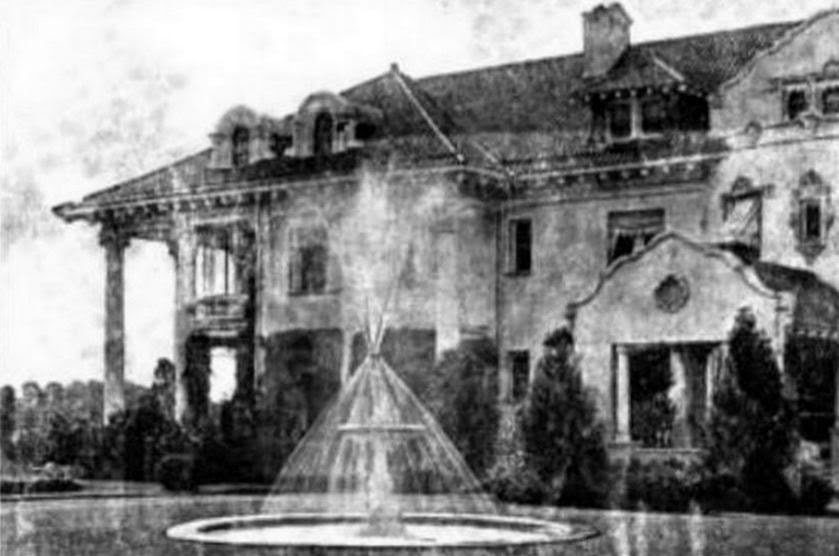 |
FOUNTAIN, RESIDENCE, "WINFIELD HALL"
|
 |
| "WINFIELD HALL" One of the first Mediterranean villa-style residences in the New York area, the house balanced Spanish and Renaissance details to create a formal, symmetrical villa. |
 |
| "WINFIELD HALL" The walls were of rough-cast stucco over brick, and the red-tiled roof featured pyramidal gables at each end, with heavily trimmed segmental-headed dormers over the end pavilions and pyramid-capped dormers flanking the baroque scrolled pediment at the center of the main facade. |
 |
| SOUTHEAST FRONT, "WINFIELD HALL" |
 |
| "WINFIELD HALL" Within the formal volume of the house, outdoor rooms, some sheltered and some open to the sun, let the sun and breeze into the house in a dozen places. |
 |
NORTH FRONT, RESIDENCE, A. C. HUMPHREYS, GLEN COVE, L. I.
C. P. H. Gilbert, Architect
|
 |
| ROSE GARDEN, "WINFIELD HALL" Above is the formal rose garden on the north side of "Winfield Hall" facing Long Island Sound and golf course the Woolworth family enjoyed. |
 |
| ROSE GARDEN, "WINFIELD HALL" |
 |
| ROSE GARDEN, "WINFIELD HALL" |
 |
| ROSE GARDEN, "WINFIELD HALL" |
 |
| ROSE GARDEN, "WINFIELD HALL" |
 |
HALL, RESIDENCE, A. C. HUMPHREYS, GLEN COVE, L. I.
C. P. H. Gilbert, Architect |
 |
| ENTRANCE HALL, "WINFIELD HALL" Above is the entrance hall to "Winfield Hall" in 1916, with carved mahogany walls and woodwork of fluted crowned columns decorated with Renaissance chairs flanking the main entrance with Persian rugs and ornate fire-irons resting in front of the mantel on the left side. To the right on the flocked brocade paper is a photograph of the Woolworth building in New York City. To the right is the south end of the entrance hall with its paneled walls flocked paper and the staircase with its impressive moldings. Several nineteenth century French oil paintings adorn the mantel and coved panned wall with Persian prayer rugs draped over the railing reflects the ideals of the Edwardian age. To the right is the entrance to the Music room with its Renaissance furnishings and grandfather clock. |
 |
| ENTRANCE HALL, "WINFIELD HALL" The north end of the entrance hall with its rich paneled walls, mantel, and staircase is decorated with nineteenth century French and American oil paintings and a Persian prayer rug is draped over the railing with the grand light fixtures, which reflects the ideals of the Edwardian age of grand comfort. |
 |
| ENTRANCE HALL. "WINFIELD HALL" Above is the south end of the entrance hall with its paneled walls flocked paper holding a drawing of the Woolworth Buildings above the renaissance table of flowers. The grandfather clock between the fluted columns and the armed renaissance chair flank the front door entrance. |
 |
DINING ROOM, RESIDENCE, A. C. HUMPHREYS, GLEN COVE, L. I.
C. P. H. Gilbert, Architect
|
 |
| DINNING ROOM, "WINFIELD HALL" Above is the formal dining room designed by Jennie Woolworth, with its hand-painted, imported Zuber French mural wall coverings. The walls are papered by a wall covering whose pear-wood hand-carved wood block printed papers date back 200 years. The design process takes over one year to produce and requires 20 artisans to engrave heavy wood-blocks with specific details of the panorama. Over 1,500 wood blocks go into each single mural. The mahogany dining table and chairs are Chippendale and the entrance on the left in the dining room leads to the conservatory breakfast room. |
 |
| DRAWING ROOM & MUSIC ROOM, "WINFIELD HALL" Above is the formal drawing room and music room of "Winfield Hall', which consists of Renaissance furnishings, Persian carpets, crystal vases, and nineteenth century French and American oil painting's. The ornate carved mahogany mantel holds the famous Woolworth clock. Wall sconces flank the paneled alcove. |
 |
| DRAWING ROOM & MUSIC ROOM, "WINFIELD HALL" Above is the organ and Renaissance furnishings in the drawing room, music room of "Winfield Hall". The paneled wall with the draped windows face south to the main entrance and belvedere leading to the mansion. The paneled grill wall behind the crystal lamps contains part of the sound system of organ pipes for the organ. |
 |
| CONSERVATORY BREAKFAST ROOM, "WINFIELD HALL" Facing north on Long Island Sound is the Woolworth conservatory breakfast room in "Winfield Hall". |
 |
| PIAZZA, "WINFIELD HALL" Above is the piazza at the east end of "Winfield Hall" that offered a view of the rose garden and Long Island Sound to the north. |
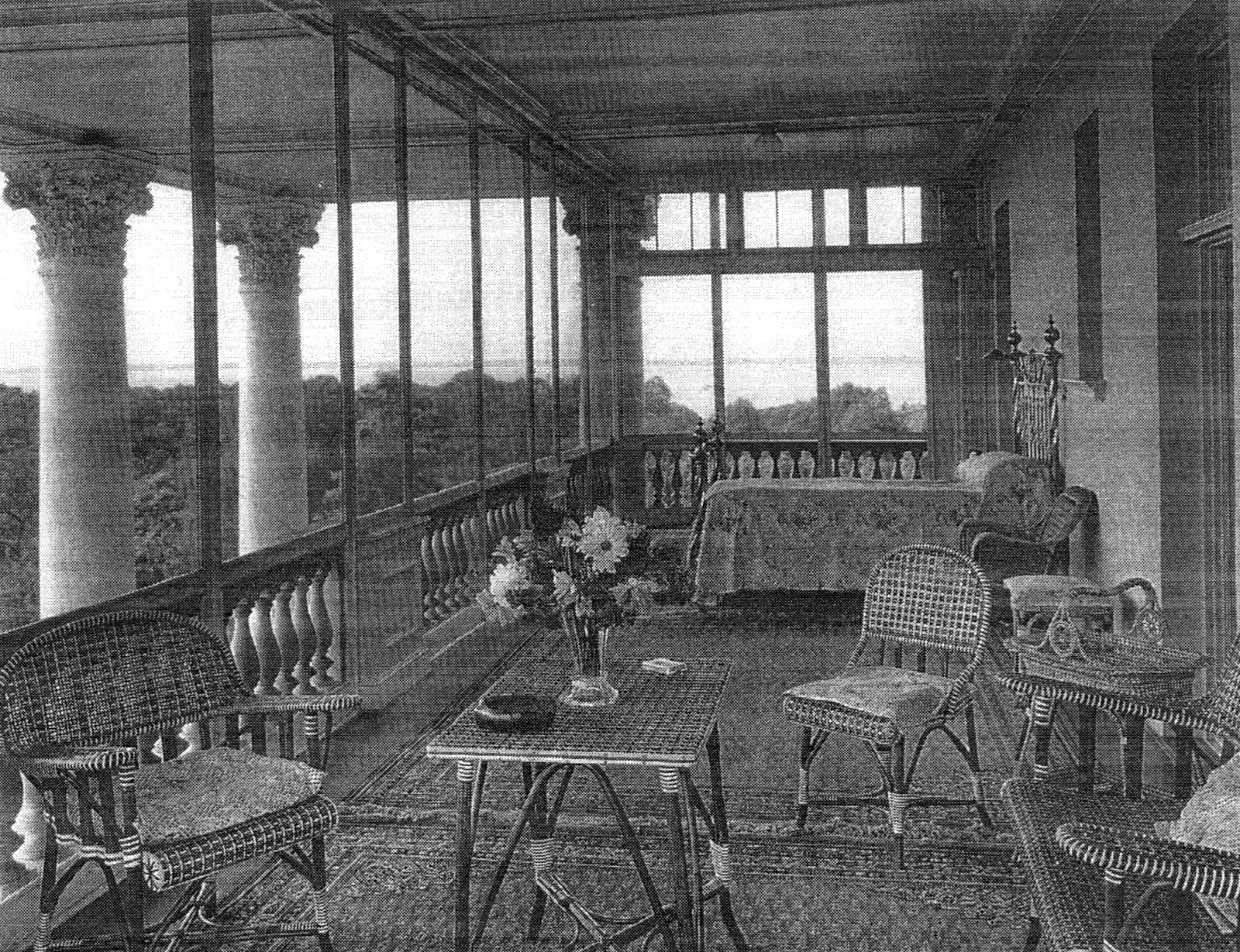 |
| SLEEPING PORCH, "WINFIELD HALL" |
 |
FIRST FLOOR PLAN, RESIDENCE, A. C. HUMPHREYS, GLEN COVE, L. I.
C. P. H. Gilbert, Architect
|
 |
SECOND FLOOR PLAN, RESIDENCE, A. C. HUMPHREYS, GLEN COVE, L. I.
C. P. H. Gilbert, Architect
|
Woolworth already had plans of rebuilding a new "Winfield Hall" with $10,000,000 in cash.
Follow THIS LINK for a post on the construction of the new "Winfield Hall".


